
Research and Development
Our Research and Development Programme
At the inception, to kick start our project, we relied heavily on equipment and components donated by many Rehabilitation Centres in the UK. As the demand for our services grew and our capacity to provide increased in parallel, we anticipated that there will be a need for us to manufacture our own components and appliances.
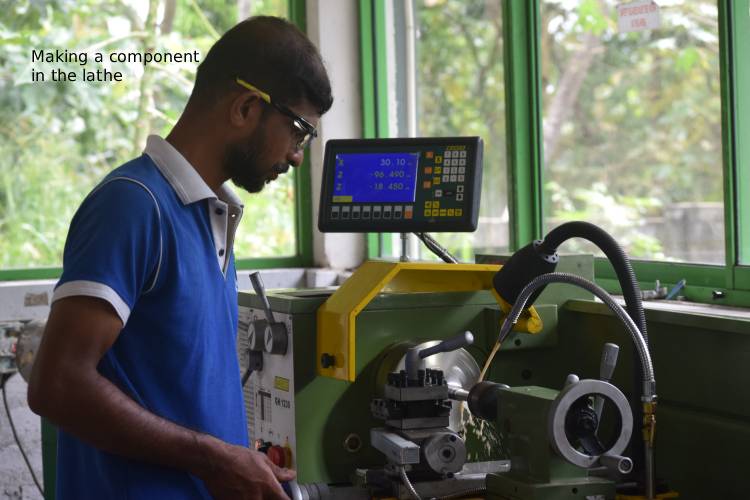
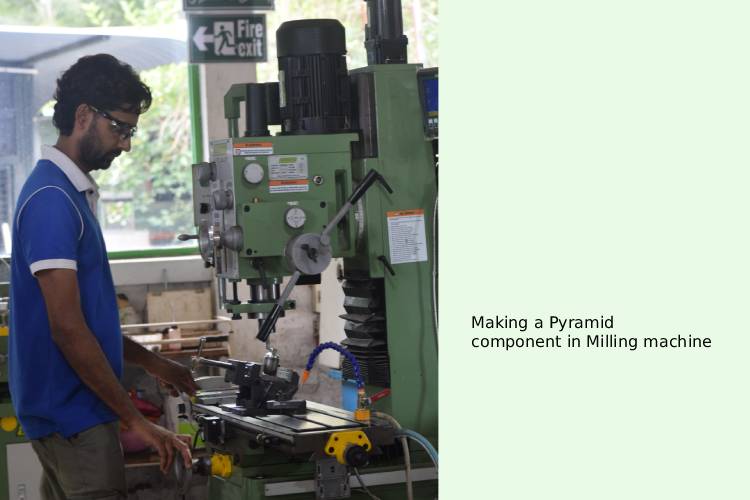
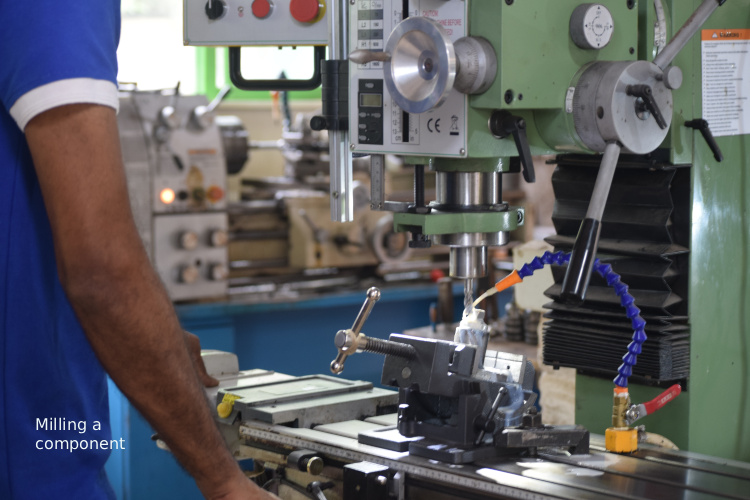
We were very fortunate to receive a generous donation from the Rotary Jaipur Programme in 2011 under their Matching Grant scheme. This was spearheaded by Dr Subramainiah Ganesh from Wales who was heading the Rotary Jaipur Programme.. We purchased and installed some heavy machines at our Mahawa facility using this grant funds and began manufacturing several essential components needed for artificial limbs.
In 2024, we received another large Grant from the Rotary Foundation under their Global Matching Grant scheme. This was facilitated by expatriate Sri Lankans led by Drs Leonard Munasinghe and Lionel Samarasinghe in London, Mrs Pubudu de Soysa from Colombo Rotary Club as well as British Rotarians at Golders Green Rotary Club in London led by Mr David Granell. This fund was used to establish a new Centre at Balapitiya and purchase more heavy machines to replace the worn out ones at Mahawa. This has ensured a better service to the amputee people in the South whilst improving production at Mahawa which benefits Nationally.
Our Research has extended into the clinical field in the form of several surveys which have given us a good understanding of the needs of amputee people and how to deal with them. We conduct a regular Clinical Audit programme which informs us about the outcomes of our services and we use our client feedback to improve our processes continuosly.
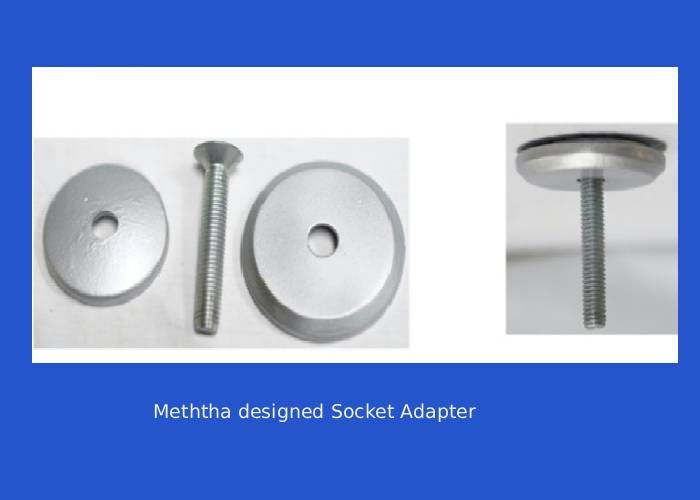
Manufacturing components for artificial limbs
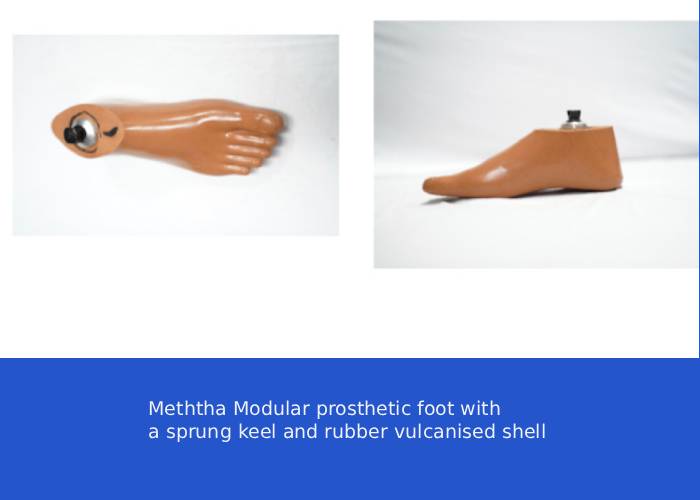
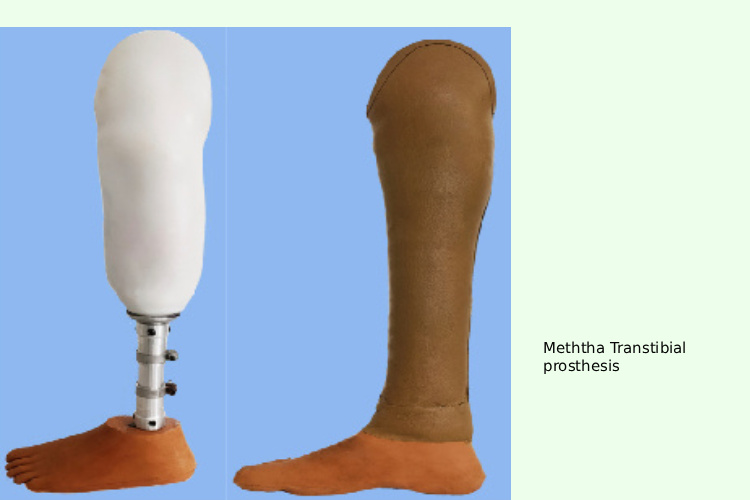
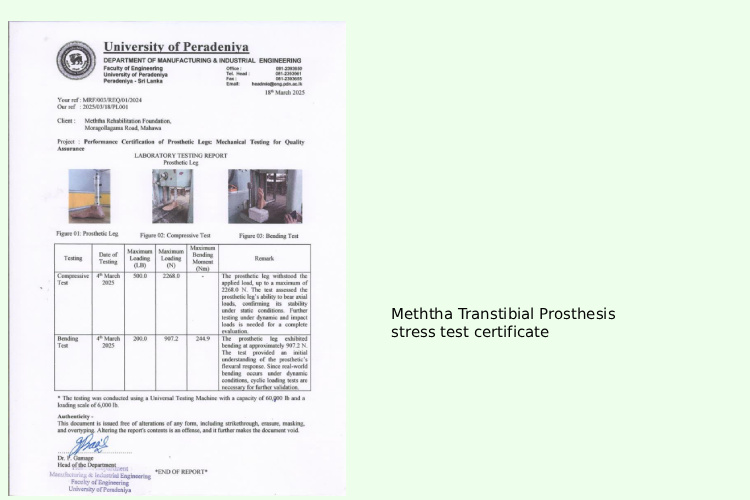
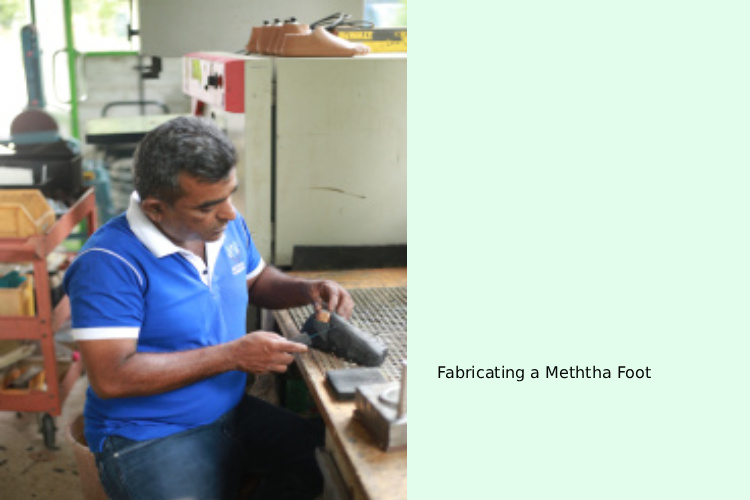
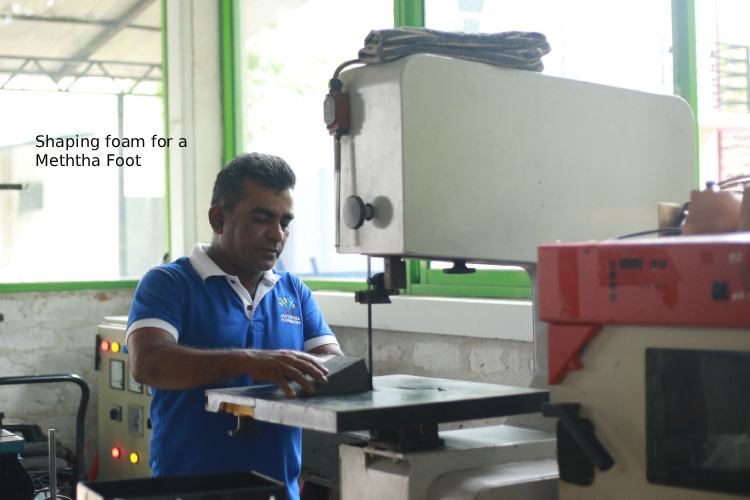
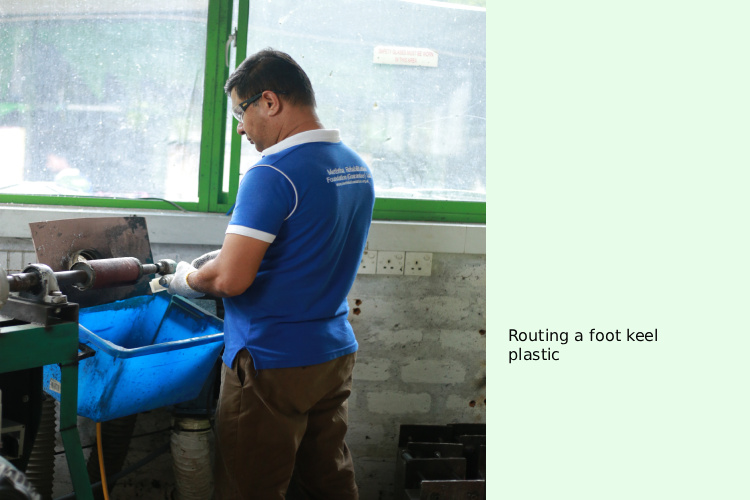
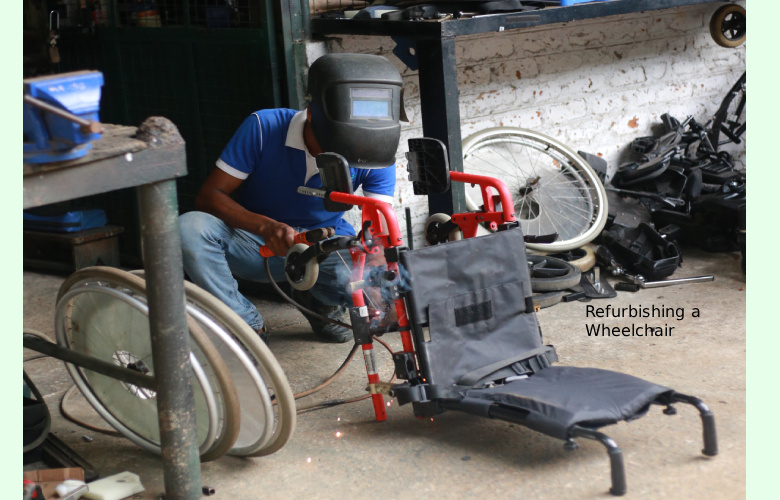
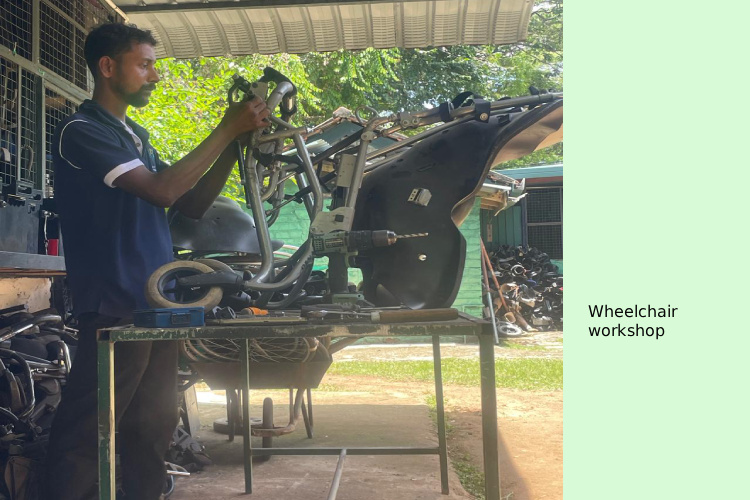
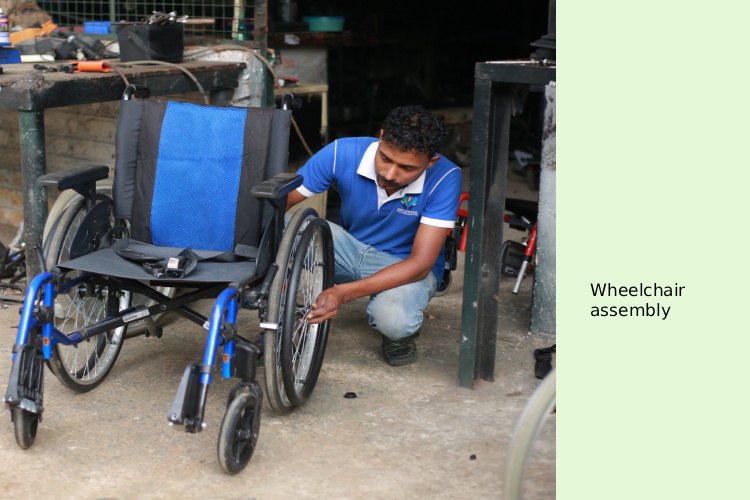
Our Meththa artificial foot.
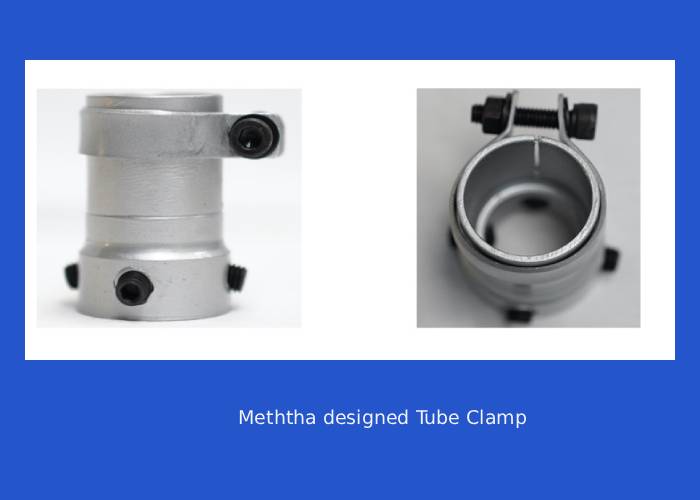
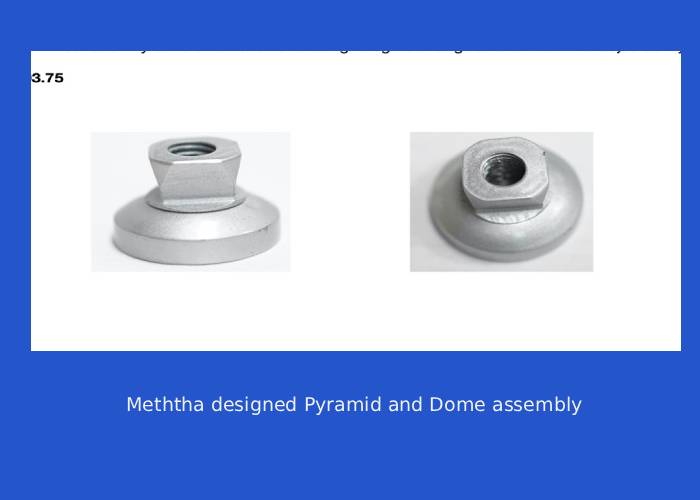
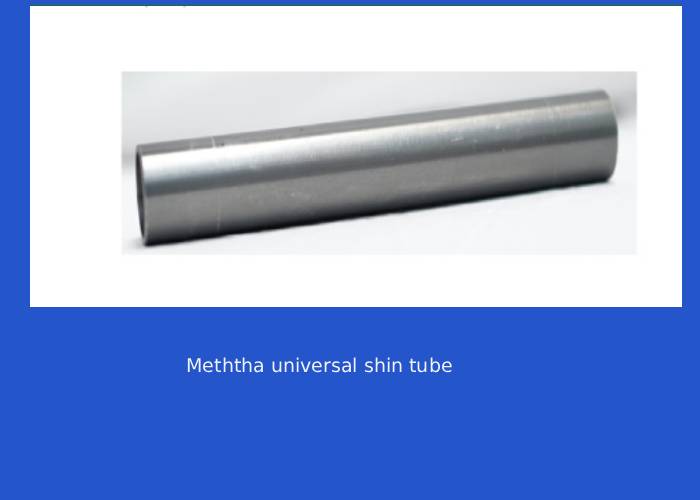
We researched many options for our artificial foot which is based on the original Jaipur concept and finally arrived at a satisfactory model which integrates well into our modular limb build. This foot is almost entirely made of recycled materials. The cord rubber and compound rubber are donationd by two international rubber products manufacturing companies in Colombo. These are off cuts which would otherwise be discarded. The spring like keel is remoulded from remnants of plastic sheets that we use for prosthetic socket manufacturing. The pyramid and dome complex is the same used for the rest of the limb build. Only the foam and glue are purchased locally.
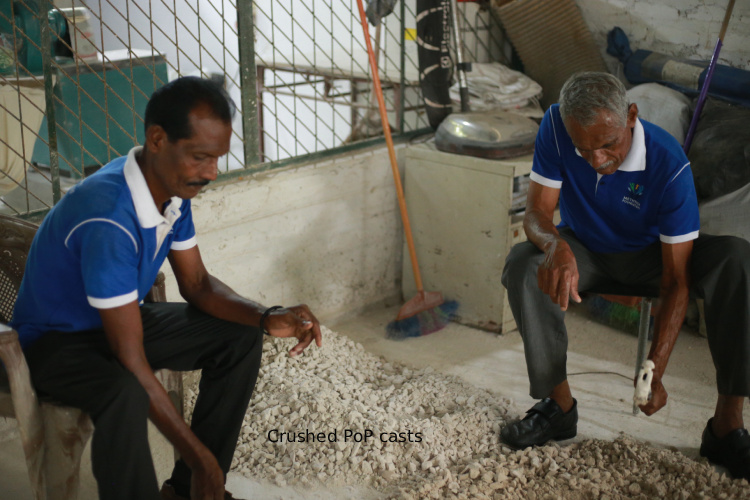
The Rotary Grants mentioned above and a Sri Lankan expatriate doctors’ charity in USA funded the manufacture of Aluminium moulds needed for vulcanising the artificial feet.
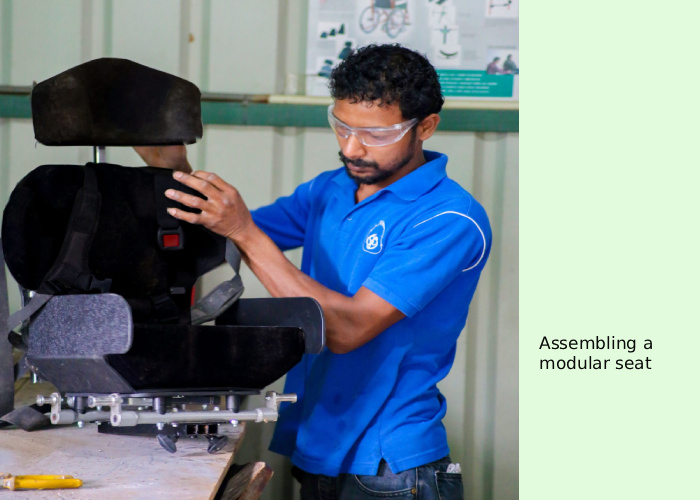
Simultaneously, we also started a repair and refurbishing facility for the wheelchairs and buggies we receive from the UK.
Diabetic (Neuropathic) foot ulcer management
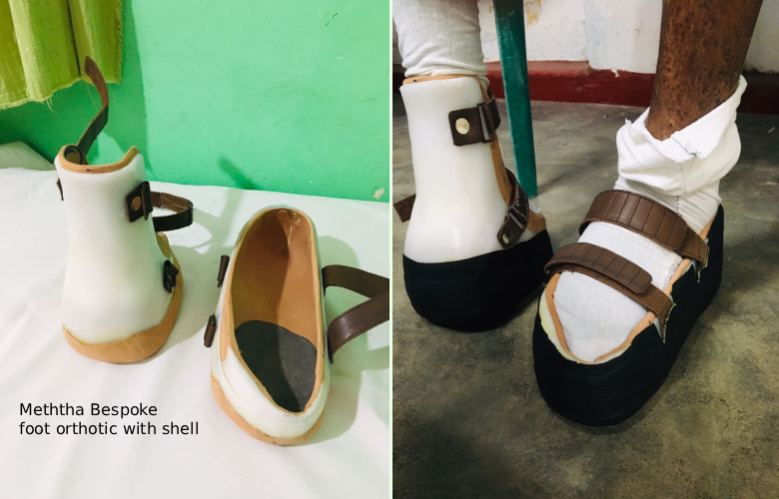
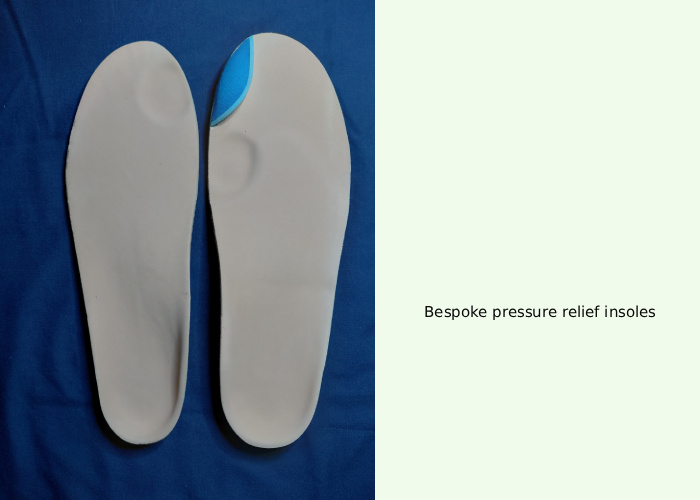
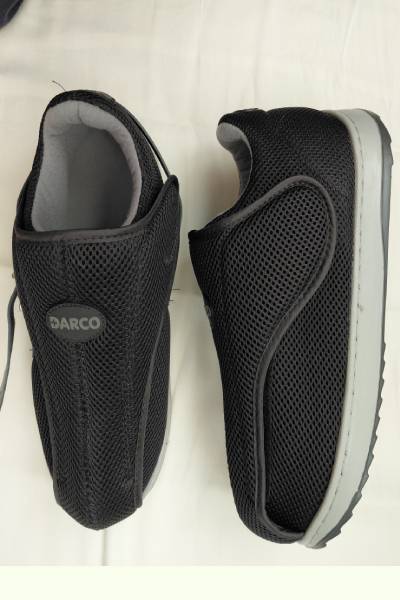
Dr Anuruddha, a surgeon based at the Vijaya Kumaranatunga Hospital began referring people with diabetic foot ulcers with requests for specialised footwear and we had to cope with this demand as well. Many of these people need bespoke footwear which can accommodate foot deformities and provide relief for ulcerated areas whilst receiving very little care and maintenance in the harsh conditions under which they are worn. We dedicated a separate R&D programme to find a suitable solution.
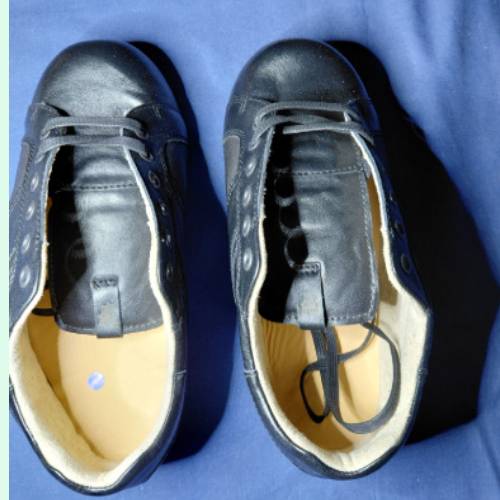
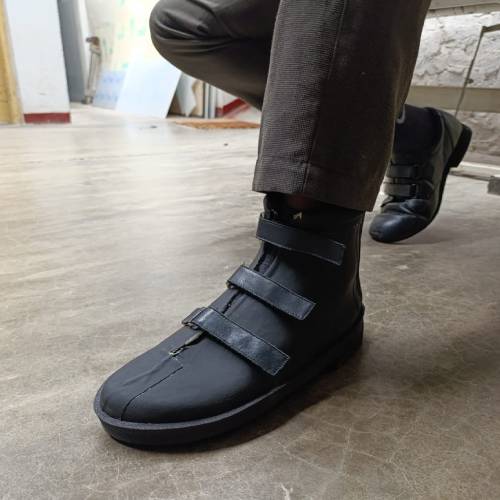
We do not have good leather production facilities essential for cobbling bespoke shoes. Therefore we researched for an alternative and arrived at what is used presently. This device which is a modified DAFO consists of a moulded total contact insole over which, a shell is vaccum formed using s flexible plastic sheet. This is reinforced with a thin plastic layer as shown in the pictures opposite. The shoe is completed with a rubber sole.
This product is very effective and is gaining popularity.
Once the ulcers heal, it is possible to use conventional sandles with appropriate insoles.
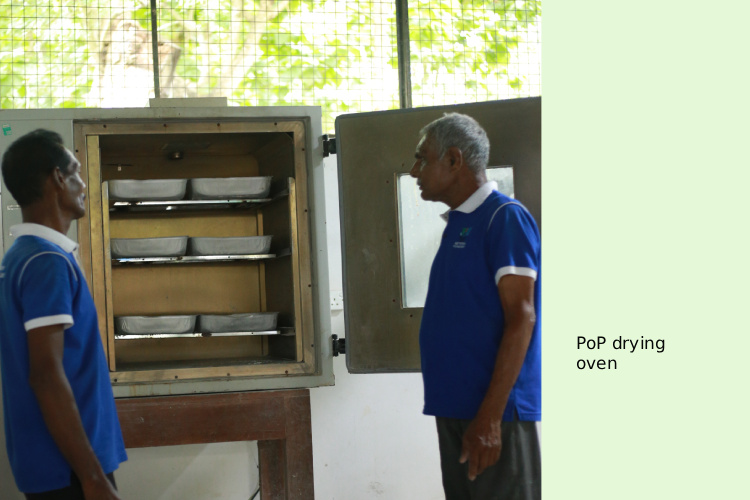
Recycling to avoid waste
Research into outcomes of our services, durability of our products and clinical audit.
The success of our R&D programme depends to a large extent on a talented and dedicated team of clinical, technical and administrative staff. Apart from our Chief Physiotherapist and CEO, rest of the staff do not have any technical or professional qualifications. Talent, ability and desire to learn supported by intermittant input from professionals from the UK have helped to upskill the work force. We remember with gratitude, the input from the late Mr Bernard Waldron, a Senior Prosthetist from the UK, who helped to start the MRFGL project with our Consultant Director and the Meththa Trust Boards as well as many British collegues who visit us in Sri Lanka for training and education of our staff.
Surveys showed that the main reasons for amputee people to stop using prostheses after the first appliance wears out are lack of fnds and difficuly in accessing our services. Co-morbidity and lack of interest contribute to this. This group forms a third of our amputee population. These people become heavily dependent and have a poor Quality of life.
Another third, who have at least Grade 8 education and are above the Poverty Line cuntinue to use our prostheses and benefit, being fully tehabilitated. They overcome the problems from limb loss and integrate well
In the remaining third, many pass away from co-morbidities or cannot be contacted.
Planned Research Projects
- Developmnt of a prosthetic knee. Mr Chanaka Gunarathne who trained with us and is now employed as a Prosthetict in Australia is undertaking a research project for his Ph D aimed at designing a prosthetic knee that can be manufactured locally. He will use the facilities at Mahawa for a field trial of his prototype/
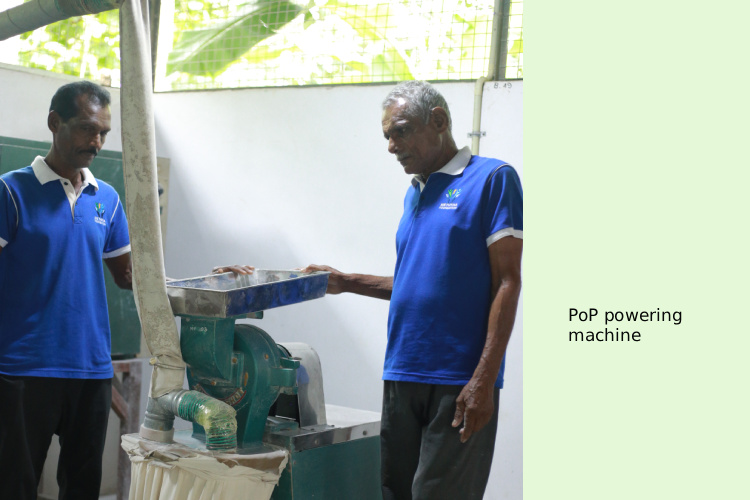
- A project to find ways of recycling used polypropylene sheets into new sockets.
- A methos to manufacture silicone suspension sleeves locally.
Finally, our work needs funds. We depend on donation and we are not profit oriented. All donations are used for srvice functions.
PLEASE DONATE LAVISHLY USING THE JUSTGIVING BUTTON BELOW